
When in doubt - any kind of doubt:wash! That is rule number one. ... If you slip and fall off something and somebody laughs at you - wash. If you are getting the worst of an argument and want to break off hostilities until you have composed yourself, start washing. ... If somebody calls you and you don't care to come and still don't wish to make a direct insult - wash. ... Overcome by an emotion - a wash will help you get a grip on yourself again. Any time, anyhow, in any manner, for whatever purpose, wherever you are, whenever and why ever that you want to clear the air, or get a moment's respite or think things over - wash! And, ... of course you also wash to get clean and to keep clean.
Jennie's advice to Peter in "When in Doubt - Wash" by Paul Gallico
http://nyrbclassics.tumblr.com/post/48048245508/when-in-doubtwash
Cats do not count to ten to keep their cool - they wash. Licking themselves has become more than just a way to keep clean although it was probably originally just that: a method to reduce the scent of which an enemy could take advantage. "A lick and a promise" means to do a better job later. Dogs don't need to clean themselves. They live in packs and scent helps them bond and keep together.
 Another aspect of being a cat is self-satisfaction. A "fat cat" was first used in the 1920's for political donors and is a person who has it all and knows it. If you look like "the cat that ate the canary (or cream)", a phrase that dates back to the 1890's, you are quite pleased with yourself. Rosalie Moore in the poem "Catalogue" states: "Cats sleep fat. They spread comfort beneath them like a good mat, as if they picked the place and then sat. You walk around one as if he were the City Hall after that."
http://www.bossybetty.com/2010/05/poetry-tuesday-catalogue-by-rosalie.html
A cat can take care of itself in a fight. "To fight like cats and dogs" means to tear into each other. A dog fights mainly with its mouth but a cat uses its mouth and claws on all four feet. A dog, usually many times heavier than a cat, often has a difficult time holding its own and ends up badly scratched. "To fight like Kilkenny cats" means to fight until both sides lose everything. The expression comes from early Irish stories about two cats that fought until only their tails were left. The stories may have been inspired by a reading from Galatians Chapter 5: "Love your neighbor as yourself. If you bite and devour each other, watch out, or you will be destroyed by each other."
In literature and heraldry a cat is often a symbol of independence. If it is a black cat it can mean bad luck or evil, possibly because black is the color of night and a cat's vertical pupils change as darkness falls much like the phases of the moon. In China a cat is a symbol of love and if it is shown reaching for a butterfly it symbolizes hope for old age. In many Islamic countries when a cat is observed entering a mosque it is considered good luck. In Egypt it was once considered a symbol of sexual desire (but just about every animal was at some point!).
A cathouse is a bordello or house of prostitution (a female cat or queen in heat attracts lots of toms and can in fact bear a litter of kittens with different fathers). The term could have arisen from "cat" being slang for a prostitute as far back as the 1400's. If someone is catty she cuts someone down behind her back, which is a thoroughly human thing to do not something ever done by cats. Maybe the term is related to the early use of a cat for a prostitute. To call someone a kitten means she is anything but catty and refers to that person's lovability.
Some claim a cat has nine lives. Shakespeare even mentions it in Romeo and Juliet. The myth has been around a long time and in many cultures, but probably has to do with the incredible agility of a cat (https://www.youtube.com/watch?v=Ua4Gh_4XdwQ) and the fact that nine is considered a lucky number in many cultures. On the other hand, a cat o' nine tails is very unlucky. It is a whip with nine lashes used to punish prisoners. The term first appeared in 1681 and was probably called "cat" because it left parallel welts like the claw marks of a cat.

There once was a very sweet cat
Who thought that she sighted a rat.
But it all was a joke
With a laugh and a poke
So she washed and turned to her back!
THE END

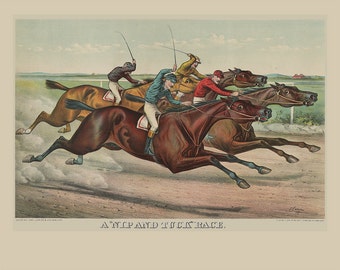 You must keep on your toes if you don't want to be caught flat-footed! In this case flat-footed does not refer to fallen arches but rather to the condition of a race horse's feet. If all four are on the ground (standing instead of prancing) when the gate rises, the horse will get a slower start. If you are caught flat-footed you may be forced to cool your heels while waiting for another opportunity. In the seventeenth century "to cool your heels" replaced an earlier phrase, "to cool your hoofs", a reference to a horse that takes advantage of a break by lying down. "To kick up your heels" on the other hand, refers to a horse frisking about in the pasture after a hard day's work.